
RB Salzburg are not just a powerhouse in Austrian football, they are a club with a real eye for talent. They won the UEFA Youth League in 2016/17, and they have a long record of turning young players into first-team assets. One of the youths we picked out when this profile first ran in January 2020 was Cameroon-born centre-back, Jérôme Onguéné.
[powerkit_toc title=”Table of Contents” depth=”1″ min_count=”4″ min_characters=”1000″]
What follows is what we saw then, kept in the tense we wrote it. The scouting sheet at the time read: born December 22, 1997, Mbalmayo in Cameroon, Cameroonian and French, 190cm, 77kg, right-footed centre-back at RB Salzburg.
Who is Jérôme Onguéné?
We knew little about his early years in Cameroon; his first documented football came in France, at FC Sochaux, where he signed his first professional contract. He spent six years there, rose through the ranks, and made his Ligue 1 debut before moving on.
More about Jérôme Onguéné
As a 20-year-old he moved to Germany, to VfB Stuttgart. He made just 2 appearances before being loaned to RB Salzburg, where he made his first real impact, enough to convince the group to make the deal permanent through RB Leipzig. From there the Cameroon international kept playing for the Austrian side and picked up 4 caps along the way. By the time we wrote, Onguéné had lifted three trophies with Salzburg, the Austrian Bundesliga (17/18, 18/19) and the Austrian Cup (18/19), and he had been part of the France U19 side that won the 2016 European U19 Championship.
What was his style of play?
Onguéné was a no-nonsense centre-back in the truest sense. The job, the way this type of defender plays it, was to win the ball back and clear it safely, simple and efficient when the game called for it.
He was already notorious for a reckless streak, and he liked a tackle the way a striker likes a goal. He was not the fanciest defender, but he got the job done and kept opponents out of the 18-yard box at any cost. His 190cm frame made him a nightmare for strikers on the ground and in the air, and the Cameroonian was averaging 2.3 successful aerial duels a game that season.
He was usually, and wisely, paired with a ball-playing centre-back. That balanced and stabilised the back line and gave the defence another dimension.
What were his strengths?
Onguéné had a knack for the physical side of defending, and strength was a big part of why. He was a naturally fit player, and given his size the power came easily. But strength alone is not much use without the will to impose it at the right moment, and that is where his bravery and determination came in.
He went into challenges more often than most because of that no-fear attitude, which made him a key yet risky tackler, fruitful more often than not. When a tackle was not on, he could fall back on real recovery pace. That was no surprise to us, because he was an impressive all-round athlete with fitness as his forte, and for a defender his size that turn of speed is not something you see often.
What were his weaknesses?
Onguéné had no glaring weakness in his pure defending game. Where he fell short was on the ball, in the footballing skills. His playmaking was limited; he lacked the vision to play long passes and tended to give it to the nearest team-mate, safe but slow, which is exactly why he was usually paired with a centre-back who could ping direct balls forward.
Crossing was a weakness too, part of why he was never used as a full-back. Salzburg’s number 6 also found it hard to dribble his way out of tricky spots, as you could regularly see in his games.
What the numbers said then
Onguéné had already played 18 times that season, unsurprisingly all at centre-back. At 22 he had banked serious experience, including at the very top level in the Champions League, and he had given Salzburg solid performances against a range of opponents. Playing in a young team was only going to help his minutes and his chances of impressing on an international scale. Across his career he had racked up 123 club appearances, so he was no rookie: an experienced, disciplined defender with moments of real brilliance at the back. With Cameroon short of centre-back options, he also had a clear path to more caps.
Transfer history then
As per Transfermarkt at the time:
- 15/16: FC Sochaux U19 to FC Sochaux
- 16/17: FC Sochaux to VfB Stuttgart for €2.50m
- 17/18: Loaned out to RB Salzburg
- 18/19: FC Sochaux to RB Salzburg for €2.00m
He had always been touted as a promising player, and a jump from Ligue 2 to the Bundesliga at a young age said as much. He looked able to adapt to whatever he faced.
Our view and what we predicted
Time to own the forecast. We were bullish. We had him pegged for a top-half Bundesliga move, naming Borussia Dortmund, Schalke and Bayer Leverkusen as realistic, then went further and floated Liverpool and Manchester City as dream destinations partnering Virgil van Dijk or Aymeric Laporte, two excellent ball-playing defenders, with a Paris Saint-Germain wildcard next to Thiago Silva. That was a lot of ceiling to hang on a Salzburg squad defender, and the elite move never came. We even suggested a pacey 22-year-old should push for a top-half English side as long as he could play regularly and keep improving. We called the athleticism right and the level wrong.
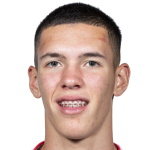
Where is he now
Onguéné’s path went sideways rather than up. Our data picks him up on a short Serie A spell and, more recently, in Turkey, where he has been getting regular minutes. Here is the record we hold.
| Season | Club | Apps | Goals |
|---|---|---|---|
| 2020/21 | Genoa | 4 | 0 |
| 2025/26 | Eyüpspor | 13 | 0 |
For his current rating, minutes and fitness, see his live Jérôme Onguéné scout report.
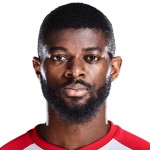
Our view (summary)
The read on the player held up: a brave, quick, physical defender, best served next to a passer, who could adapt to different settings. The projection of a Champions League move did not, and we will wear that. What is fair to say is that his biggest asset, adaptability, is exactly what has kept him playing across leagues and countries this far into his career. His ceiling was lower than we hoped, but the defender we described is still recognisable on the pitch.