
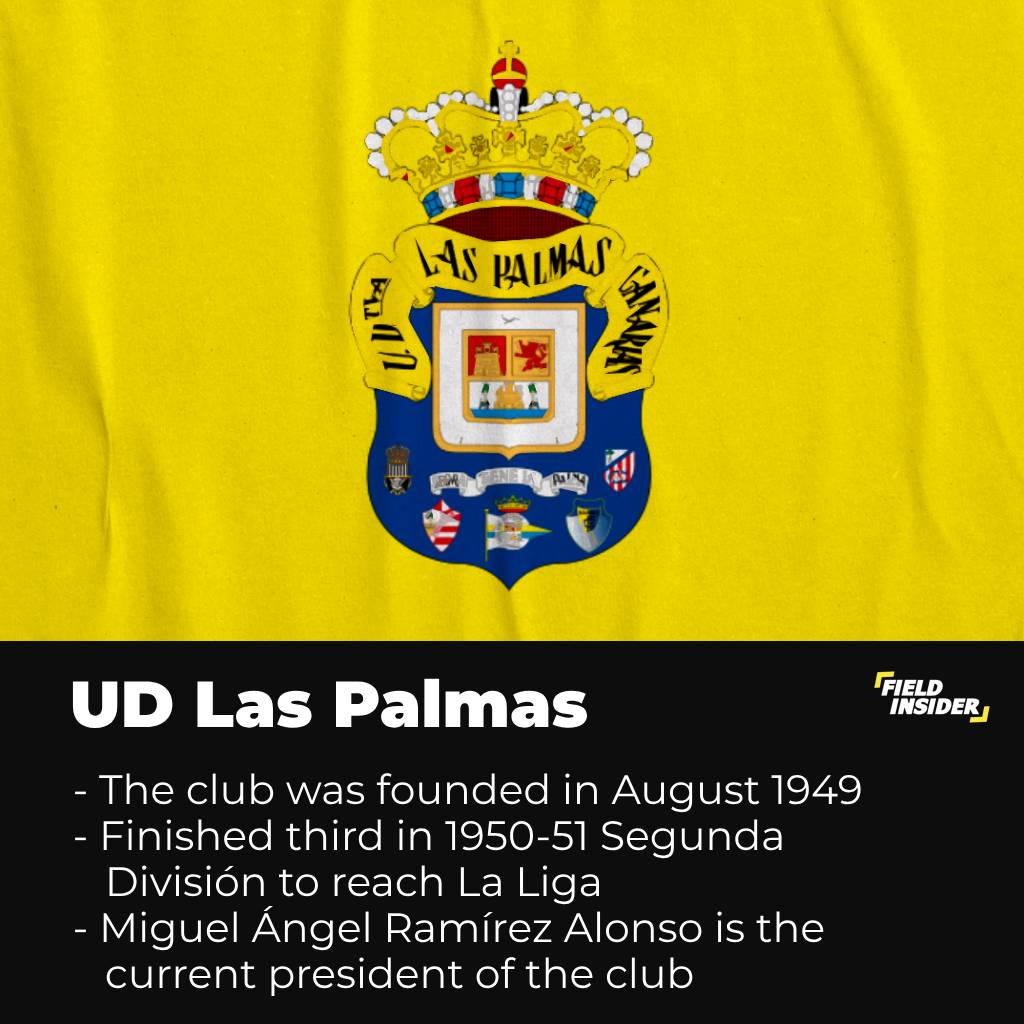
Unión Deportiva Las Palmas, S.A.D. comes from Las Palmas in the Canary Islands. Founded on 22 August 1949, the club plays at the Estadio Gran Canaria in front of 32,400 fans. Their yellow shirts, blue shorts and blue socks have been a fixture in Spanish football for decades.
We have been working through the big La Liga clubs one by one, and Las Palmas is our next stop. If you missed our other club pieces, our soccer section has plenty more.
Who Are Las Palmas In La Liga?
Las Palmas hold a record no other Spanish club can claim: back-to-back promotions in their first two seasons, straight into La Liga. What followed was a 19-year run in the top flight. They have gone up three more times since, adding another eight top-flight seasons, and their climb from 2015 to 2018 is the most recent of those.
History of Las Palmas
Early years
UD Las Palmas was formed on 22 August 1949 from a merger of five island clubs:
- Club Deportivo Gran Canaria
- Atlético Club de Fútbol
- Real Club Victoria
- Arenas Club
- Marino Fútbol Club
The idea was to keep local talent on the island rather than lose it to the mainland.
The name caused a debate. "Deportivo Canarias" was dropped because it covered the whole archipelago, and "Las Palmas" on its own was rejected because a defunct club already held the claim. "Unión Deportiva Las Palmas" was the compromise, honouring both the merger and the home city. The first training session was held on 16 September 1949.
The club moved fast. After finishing second in their first Tercera División season (1949-50), they came third in Segunda División the next year and earned their La Liga debut. They became the first Spanish club to win promotion in each of their opening two seasons. That maiden top-flight campaign ended in relegation, but they were back up in 1954 for a six-year stay.
Las Palmas in La Liga
That 19-year presence ran until 1982-83. After returning as champions at the end of the 1963-64 season, the club had its best years under Vicente Dauder. The peak came in 1967-68, when they finished third, behind only Real Madrid and FC Barcelona. For an island side to split the season with those two takes some doing, and I still rate it as one of the great overachievements of that era.
From the 1990s on, Las Palmas were mostly a Segunda División club, with a six-year spell in Segunda División B and a short top-flight return from 2000 to 2002. They still produced big moments, including a 4-2 home win over Real Madrid on 3 October 2001.
The ride stayed bumpy, with a narrow escape from relegation in the 2009-10 Segunda División season. Then on 27 May 2023, Las Palmas took second place on the final matchday and went up to the first division after five years in the second tier.
How Was The Club Founded?
UD Las Palmas was officially formed on 22 August 1949, having registered with the Royal Spanish Football Federation on 6 June that year. The merger was built to strengthen the island's talent pool and keep local players from chasing careers elsewhere.
The naming argument was real. "Deportivo Canarias" was dismissed for covering all the Canary Islands rather than Gran Canaria, and "Las Palmas" alone fell to a defunct club's earlier claim. "Unión Deportiva Las Palmas" won out, standing for the club's origin and its home city. On 16 September 1949, the first training session got things going.
Fans and Culture of Las Palmas
Las Palmas is more than football. The city runs over twenty festivals a year, from carnivals to concerts, with fairs and religious celebrations woven through, and it marks the national holidays in full. For a visiting fan, it is an easy place to get pulled into the local rhythm.
This Gran Canaria side, based off the northwest coast of Africa, has long drawn attention for its style of play. As of the 2022-23 promotion season, under manager Setién, the club leaned on an attacking approach and a clear commitment to home-grown talent. The academy and local players have always been central to how Las Palmas see themselves.

Major Achievements in the History of the Club
The return to La Liga at the end of 1963-64 opened the club's most productive spell. Under Vicente Dauder they took third in 1967-68, holding their own behind Real Madrid and FC Barcelona.
The club also gave four players to Spain's UEFA Euro 1964 squad. The following season was better still: they finished runners-up to Real Madrid for the league title and qualified for Europe for the first time, in the 1969-70 Inter-Cities Fairs Cup.
There was tragedy too, with the sudden death of Juan Guedes in 1971 and the loss of Tonono in 1974 to a liver infection. The 1977-78 UEFA Cup brought a third European campaign, past FK Sloboda Tuzla before a defeat to Ipswich Town. The 1978 Copa del Rey final, a 1-3 loss to Barcelona, was another landmark even in defeat.
As the decades passed, Las Palmas mostly lived in the Segunda División, with a spell in Segunda División B and the odd La Liga return, notably promotion in 2015. The latest came on 27 May 2023, back to the top flight after five years down.
Notable Players in the History of Las Palmas
Plenty of real talent has come through Las Palmas over the years. Germán Dévora, Félix Marrero Morán, Tonono and Martín Marrero were among the early pioneers who laid the foundations.
Carlos Morete, Jorge Contreras and José Manuel León added their own flair, and Luis Molowny and Antonio Betancort are among the revered names who shaped the club over the years. Miguel Ángel Brindisi belongs on that list too, a player the fans took to quickly.
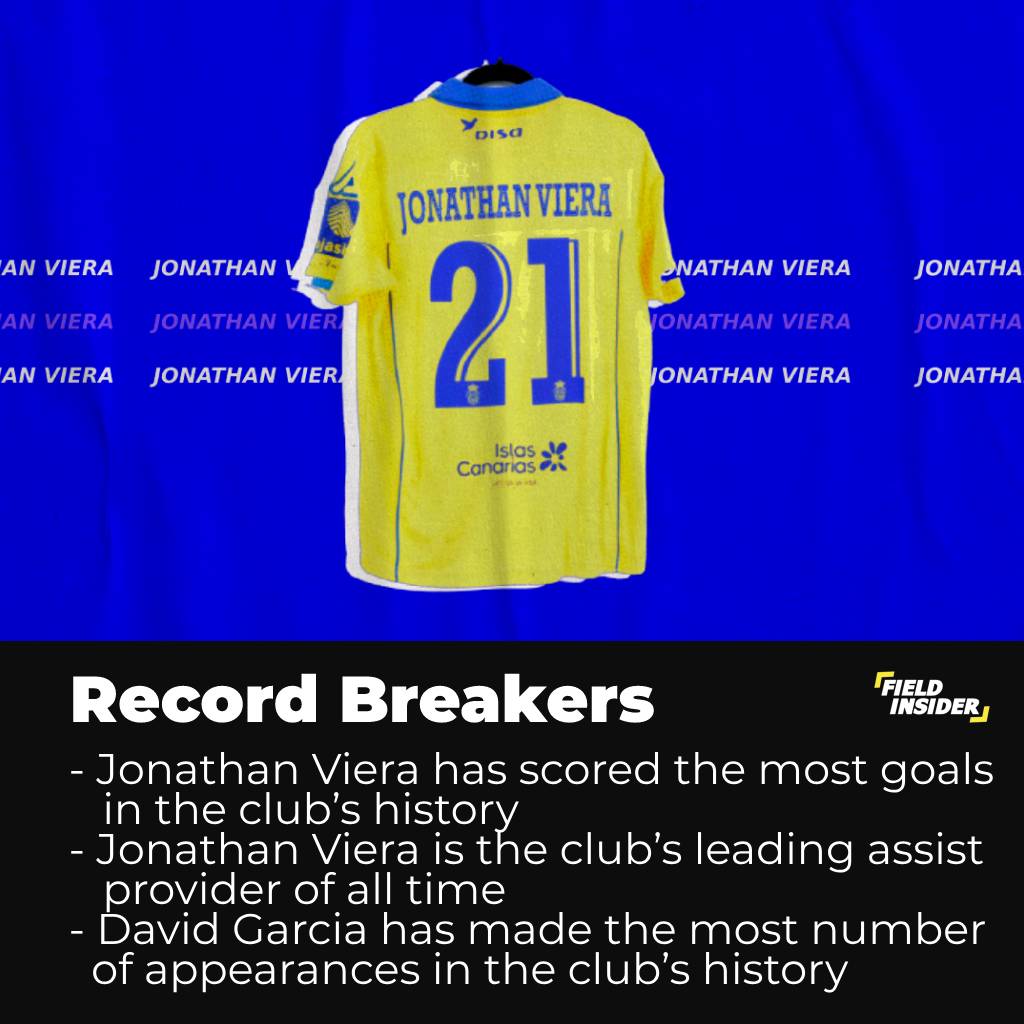
The modern face of that lineage is Jonathan Viera, the club's record scorer and a player whose Las Palmas years I always enjoyed watching. When he was on song, the whole side played through him.

Top Goal-Scorers In the History Of The Club
| Name Of Players | No. Of Goals Scored |
| Jonathan Viera | 76 |
| Rubén Castro | 68 |
| Marcos Márquez | 65 |
| Germán Dévora | 49 |
| Sergio Araujo | 47 |
Top Assist-Providers In The History Of Las Palmas
| Name Of Players | No. Of Assists |
| Jonathan Viera | 49 |
| Momo | 22 |
| Nauzet Alemán | 22 |
| Sergio Araujo | 17 |
| Tana | 13 |
Players With The Most Appearances For Club
| Name Of Players | No. Of Appearances |
| David García | 421 |
| Jonathan Viera | 257 |
| Javi Castellano | 252 |
| Momo | 247 |
| Vicente Gómez | 242 |
Most Expensive Transfers Of Las Palmas
| Name Of Player | Club From | Club To | Transfer Season | Transfer Cost |
| Álvaro | São Paulo | Las Palmas | 00/01 | €3.5 Million |
| Turu Flores | Vélez Sarsfield | Las Palmas | 96/97 | €3.3 Million |
| Manuel Neira | Colo Colo | Las Palmas | 98/99 | €3.1 Million |
| Jonathan Viera | Standard Liège | Las Palmas | 15/16 | €2.9 Million |
| Marco Haber | VfB Stuttgart | Las Palmas | 98/99 | €2.85 Million |
Home Of Las Palmas: Estadio Gran Canaria
The Estadio Gran Canaria opened in 2003 and has been the club's home ever since. With a capacity of 32,400, it has seen plenty of big nights. It was christened by a friendly between UD Las Palmas and Anderlecht that finished 2-1 to the hosts, with Rubén Castro the first man to score there.
The ground has changed over the years, losing its running track to bring fans closer to the pitch. As the 14th-largest stadium in Spain, it holds a real place in the club's story and in the hearts of its supporters. Take the track out of any bowl and the atmosphere lifts. This was no exception.
Rivalries of Las Palmas with Other Clubs
The sharpest fixture is Las Palmas against Tenerife, the Canary Islands derby. It splits loyalties across the islands, and the pride on the line makes it a game that carries well beyond the result.
What Lies Ahead For The Club?
Las Palmas is a story of resilience. From a merger of island clubs to repeated returns to La Liga, the through-line has been stubbornness and a faith in local players. That commitment to the academy and to a football culture of their own has held firm through every up and down.
With the Estadio Gran Canaria behind them and a deep history to draw on, there is plenty here to build on. For live squad ratings, fixtures and transfer news, see the club's page at /teams/las-palmas. Adios for now.