
Footballers wear black armbands to show respect and empathy after a tragedy, a quiet signal of mourning or solidarity with those grieving. It is a tradition most visible in Western football, though it travels well beyond it.
Football keeps pushing respect as a core value, and players know their visibility carries weight. The black armband is one of the simplest ways they use it. I pulled one on more than once in my playing days, and it changes the mood of a dressing room before kickoff.
key TakeawayS
| Key Takeaway | Details |
|---|---|
| Historical Origins | Began in early 20th century as a sign of mourning and respect. |
| Symbolism | Black represents mourning, unity, and empathy, connecting players and fans. |
| Occasions for Wearing | Worn during funerals, to commemorate tragedies, or mark significant events. |
| Process and Protocol | Guided by specific protocols and cultural variations around the world. |
| Misconceptions | Not a form of protest or political statement, but strictly for honor and remembrance. |
Historical Origins of Black Armbands in Football
The practice began in the early 20th century. At first it was a way for players to honor colleagues or major figures in the sport who had died. Over time it grew to include victims of tragedies and significant national or international events.
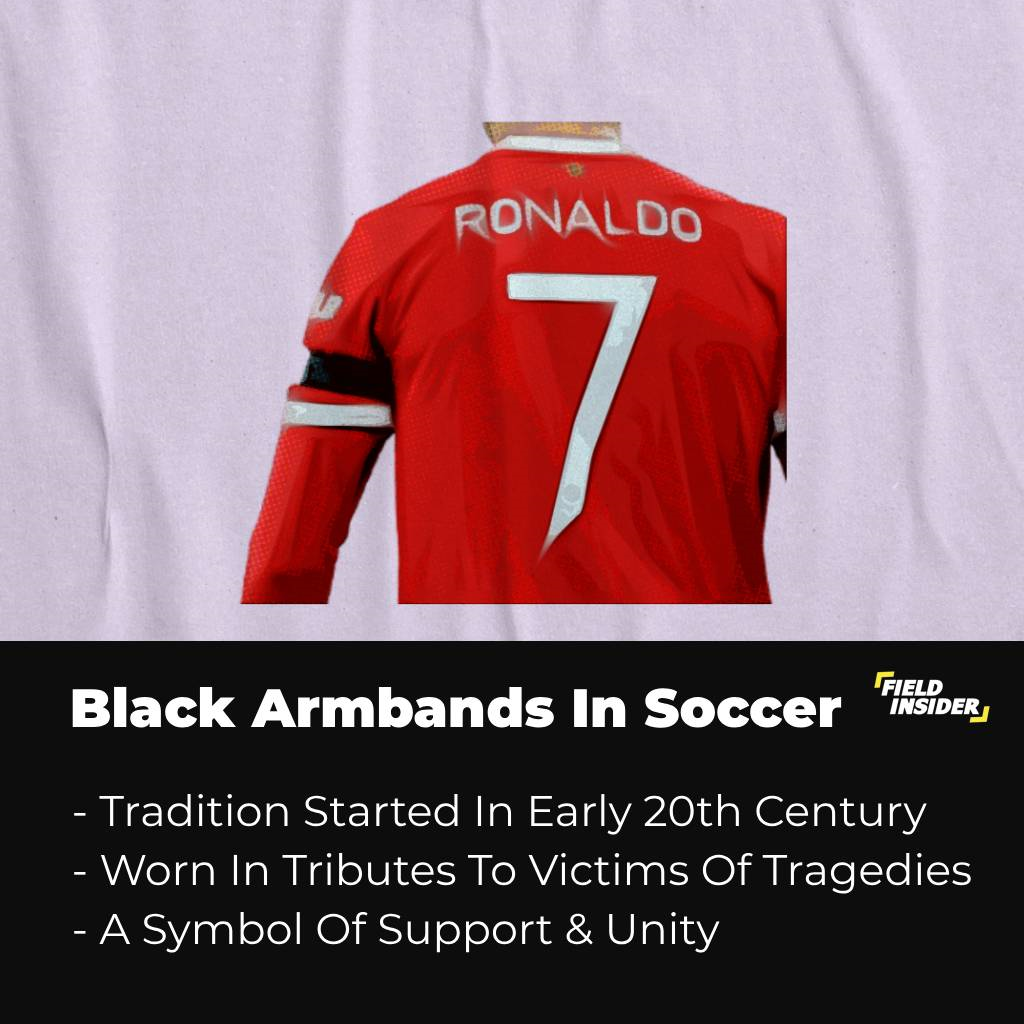
Where it all started
The black armband was first used as a mourning symbol in 1770s England. From 1795 to 1830, men and male children were expected to wear black suits and black armbands.
Mourning attire peaked during Queen Victoria's reign, from 1837 to 1901. After the death of her husband Albert in 1861, all royal servants were ordered to wear black crepe armbands in his honor for at least eight years.
Significance and Symbolism Of The Black Armband
The tradition carries real emotional weight. Black is recognised almost everywhere as the colour of mourning and remembrance, and that gives the armband its sense of respect and dignity.
A Universal Symbol of Mourning
- Cultural Universality: Across cultures, black is tied to mourning and grief. On the pitch, the armband is a visual expression of loss that needs no translation.
- Historical Consistency: The symbol has held its meaning for generations, and that continuity adds a layer of dignity to the matches where it appears.
Connecting Players and Fans
- Shared Emotions: When footballers wear black armbands it is not just their own gesture, it is shared with the fans. A minute of silence or remembrance during a match can be genuinely powerful, and it bonds the players and the crowd.
- Empathy and Solidarity: The armband stands for a collective empathy that reaches past the individual to the team, the fans, and the wider community.
A Silent Yet Powerful Message
- Non-Verbal Communication: The armband says a lot without a word. In moments of tragedy it shows the football community's capacity for respect and reflection.
- Visibility and Awareness: It can also draw attention to an event or cause that some fans may not know about, which helps build a sense of shared humanity in the game.
In short, the black armband expresses grief, respect, unity, and remembrance, and it ties players, fans, and communities together in a shared moment.
When Should Footballers Wear Black Armbands?
Black armbands turn up in a few different situations.
Funeral and Memorial Services
Players often pay tribute to people who mattered in their lives or careers. When a teammate suffers a bereavement, the squad shows compassion and unity together.
Jack Charlton | 1966 World Cup Winner
In 2020, Premier League clubs paid tribute to 1966 World Cup winner Jack Charlton, who died at the age of 85. Players honored the England national-team man and national hero with black armbands.
John Steven Taylor | Blackburn Rovers Supporter
In 2010, Blackburn Rovers marked the death of a supporter who died of a head injury while attending a game. John Steven Taylor was a devoted Rovers fan, and the club felt it deeply. Two minutes of silence were held, and the players wore black armbands against Hull.
Kobe Bryant | NBA Superstar
AC Milan paid tribute to the late Kobe Bryant, an All-Star legend. Bryant died on 26 January 2020 alongside his daughter Gianna and seven others in a helicopter crash in Calabasas, California.
Bryant grew up supporting AC Milan and often spoke about his love for the game. Milan honored him with black armbands during their Coppa Italia match against Torino.
Torino's players wore them too. Ronaldo, Messi, Neymar, Lukaku, and Mbappe were among those who paid tribute to the NBA legend.
Princess Margaret | Countess of Snowdon
The England national team paid their respects to Queen Elizabeth's sister, Princess Margaret, who died of a stroke in 2002. England wore black armbands during their friendly against the Netherlands at the Amsterdam Arena as a mark of respect.

Tragedies
Armbands also mark events that hit the world or the football community, such as accidents or acts of terror.
after Catastrophic Events
Players wear black armbands after natural disasters at home or abroad. These events are sudden and often devastating, and some touch the whole human race, so players lend their platform to raise awareness.
Tsunamis in Japan, earthquakes in Mexico, and floods in Spain are a few of the disasters where players used their visibility to show solidarity with the victims and their families.
Munich Air Disaster
Every year, current and former Manchester United players pay their respects to the victims of the 1958 Munich Air Disaster. The crash killed eight United players, three staff members, and eight sports journalists.
The plane came down on the way back from a European Cup tie against Red Star Belgrade. They are still remembered as the Flowers of Manchester. United players and their opponents traditionally wear black armbands around the 6th of February, the day of the disaster, to keep the victims' memory alive.
Historic Events
Plenty of dates in our history carry destruction and loss: wars, terror attacks, accidents. It is no surprise those dates stir strong feelings, including for footballers, who want to share the pain and show their respect to the victims.
World War One Remembrance Day
In the UK it is customary to commemorate the nation's sacrifices in World War One on November 11th, Remembrance Day, a national holiday in many countries.
In a show of solidarity, England and Germany players wore black armbands with a poppy during a 2017 friendly. Wales, Northern Ireland, and Scotland took up the same gesture in their internationals.
Bundesliga and Bundesliga 2 players wore black armbands to honor the victims of the 2015 Paris terrorist attacks, and later the victims of a racist terror attack in Hanau. Players wore them during Bayern Munich against Paderborn, with clubs across both divisions condemning the attack and sending their thoughts to the families.
Leading Cause of Sudden Death In Football Players
To dig into the causes of sudden death in footballers worldwide, and improve screening and prevention, FIFA commissioned the FIFA Sudden Death Report (FIFA-SDR), carried out by Saarland University.
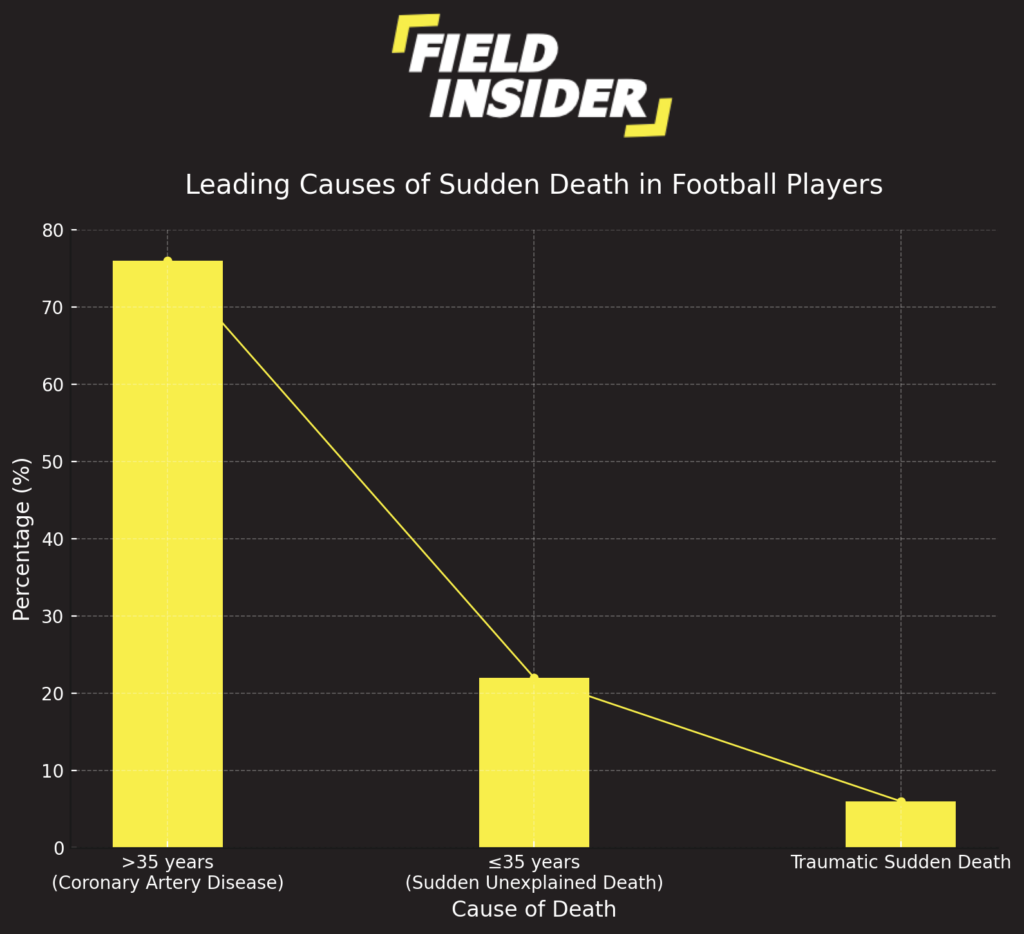
The report's leading causes of sudden death in footballers break down like this:
| Group | Leading cause | Share of cases |
|---|---|---|
| Players older than 35 | Coronary artery disease | 76% |
| Players 35 or younger | Sudden unexplained death (SUD) | 22% |
| All players | Traumatic sudden death | 6% |
The Process of Wearing Black Armbands
The call to wear black armbands is not made lightly. It usually rests with the team management or the governing bodies of leagues and tournaments, guided by set protocols that keep the gesture meaningful.
When a well-known figure passes away, or after a major global event, the authorities might mandate black armbands as a sign of respect. Following those guidelines matters, because it protects the dignity the gesture is meant to carry.
Misconceptions and Common Myths
Despite what some believe, black armbands in football are not a protest or a political statement. They exist to honor and remember people or events, and they are accepted across club rivalries and national borders alike.
Did Footballers Wear Black Armbands because of the Black Lives Matter Movement?
Players also use armbands to carry a message. We saw it with the Black Lives Matter movement, when that message was printed on the bands worn during games.
In doing so, players paid their respects to George Floyd, killed by police brutality, and showed support for the struggle for justice.
Conclusion
Footballers wear black armbands as a symbol of respect in a time of grief, and a way to show solidarity when it counts.
Once you understand the tradition, you see the game a little differently. It captures the respect, unity, and shared mourning of the football community, and it endures for good reason.